

Many online ESL teachers feel a quiet sense of guilt when they reuse ESL lessons.
They wonder if parents will notice.
They worry students will get bored.
They feel pressure to create something “new” every time they teach.
So they plan more.
Tweak endlessly.
Rebuild lessons that already worked.
But here’s the truth:
Reusing ESL lessons isn’t lazy.
It’s a skill — and it’s one that experienced teachers rely on.
Why Teachers Feel Guilty Reusing ESL Lessons
Most teachers don’t start out believing reuse is wrong.
The guilt builds over time.
It comes from:
- Comparing yourself to other teachers online
- Watching social media highlight novelty over effectiveness
- Working on platforms that reward “new” materials
- Feeling like effort must be visible to be valuable
Somewhere along the way, “professional” became confused with “constantly creating.”
But good teaching has never been about novelty.
It’s about impact.
Where the “New Every Lesson” Myth Comes From
The idea that every lesson must be new is relatively recent — and it’s largely cultural.
Online teaching spaces are full of:
- New slide decks
- New activities
- New themes every week
What we don’t see are:
- The reused lesson structures
- The repeated explanations
- The refined routines
Behind the scenes, experienced teachers aren’t reinventing lessons.
They’re refining them.
How Experienced ESL Teachers Actually Plan
Experienced ESL teachers don’t plan less.
They plan smarter by relying on consistent lesson structures that can be reused and adapted — not recreated from scratch.
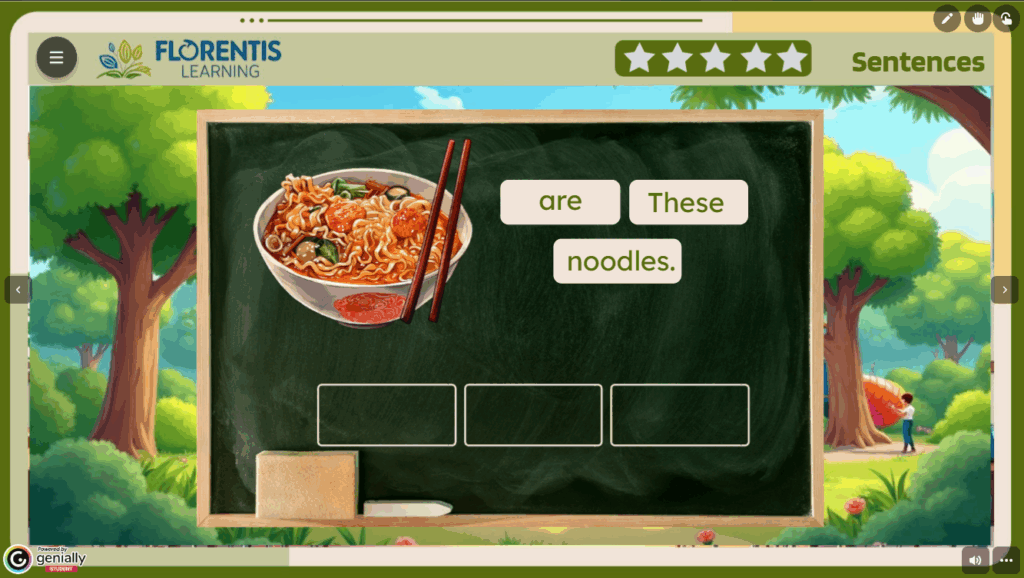
Instead of starting from scratch, they:
- Reuse proven lesson frameworks
- Adjust pacing, not content
- Respond to student needs within familiar structures
- Save their energy for interaction, not preparation
They know that consistency builds confidence — for students and teachers.
And they understand that reusing ESL lessons creates space for better teaching, not worse.
What Makes Lesson Reuse Effective (Not Boring)
Reusing lessons doesn’t mean repeating them word-for-word.
Effective lesson reuse involves:
- Adapting examples to student interests
- Adjusting difficulty based on progress
- Changing discussion prompts
- Focusing on different skills each time
The structure stays consistent.
The experience changes.
That’s what keeps lessons engaging without increasing workload. Most teachers already do this instinctively – they just don’t always recognize it was intentional reuse.
A Practical Framework for Reusing ESL Lessons Well
Reusing ESL lessons works best when teachers reuse structure, not scripts.
A helpful way to think about lesson reuse is to separate each lesson into two parts:
1. The fixed structure
2. The flexible content
The structure stays consistent from lesson to lesson.
The content adapts to the student.
Here’s what that looks like in practice.
What Should Stay the Same
These elements benefit from consistency:
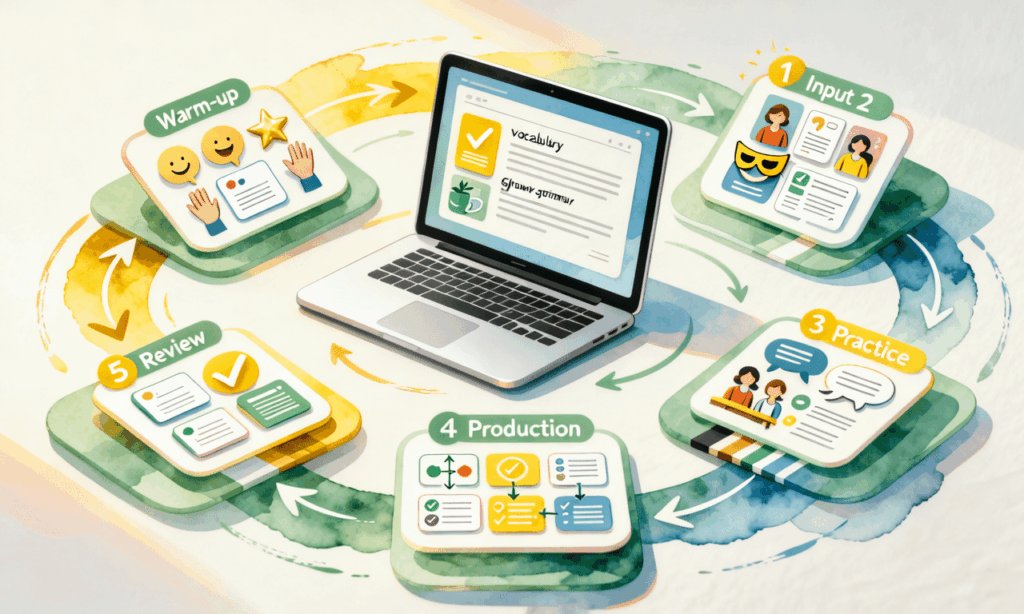
- Lesson flow (warm-up → input → practice → production → review)
- Types of activities used
- Instructions and routines
- Time spent on each stage
This consistency helps students feel secure and helps teachers teach more smoothly.
What Should Change
These elements should adapt:
- Examples and topics
- Difficulty level
- Question types
- Speaking prompts
- Pacing
When teachers reuse ESL lessons this way, lessons feel familiar without feeling repetitive.
How Reuse Reduces Burnout and Decision Fatigue
Constant creation creates constant decisions.
What activity should I use?
How should I explain this?
What worked last time?
When you reuse ESL lessons:
- Decisions decrease
- Preparation time shrinks
- Teaching feels smoother
- Energy lasts longer
This connects directly to what we explored in earlier posts:
- A strong teaching system supports decisions during lessons
- Clear online teaching organization reduces mental load
Lesson reuse works best when it’s supported by structure.
Why a Strong ESL Teaching System Makes Reuse Easier
Reusing lessons is hard when:
- You don’t know what comes next
- Progress isn’t clearly tracked
- Materials aren’t connected
That’s why effective reuse depends on a system.
A strong ESL teaching system:
- Sequences lessons intentionally
- Makes progress visible
- Supports flexible pacing
- Encourages refinement over reinvention
This is how reuse becomes sustainable — not repetitive.
A Common Myth About Curriculum and Lesson Reuse
Some teachers hesitate to reuse ESL lessons because they worry about how curriculum looks from the outside.
There’s a common belief that parents expect lessons from a well-known textbook brand — something recognizable, like a traditional coursebook — and that anything else might feel “less professional.”
In reality, most parents care far more about:
- Clear progress
- Consistent lessons
- Useful feedback
- Visible learning
They want to know what their child is learning and how it’s helping — not which logo is on the page.
A well-structured curriculum that’s taught confidently and consistently often feels more professional than a famous textbook used inconsistently.
“But I Can’t Customize Lessons If I’m Screen Sharing”
This is another common concern — and it’s understandable.
Many teachers assume that using a digital curriculum means:
- Teaching lessons exactly as written
- Losing flexibility
- Not being able to respond to individual students
In practice, customization happens around the lesson, not by rewriting it.
Teachers customize Florentis lessons, often without changing the slides at all, by:
- Adjusting pacing
- Skipping or extending activities
- Changing examples and discussion prompts
- Adding student-specific challenges
- Revisiting familiar lesson structures with new goals
Screen sharing doesn’t limit personalization — it actually makes it easier to reuse strong lesson structures while adapting how you teach them.
Curriculum Should Evolve With Teachers
One of the advantages of using a modern ESL curriculum is that it doesn’t exist in isolation.
Florentis Learning is shaped by real teachers using lessons every day. Teachers regularly share:
- Lesson ideas
- Adaptations
- Suggestions
- Gaps they notice
Those insights directly inform updates, refinements, and new lessons.
Using a curriculum doesn’t mean giving up your voice — it means contributing to something that improves over time.
How to Tell If a Lesson Is Worth Reusing
Not every lesson should be reused as-is.
But many lessons become stronger because they are reused.
Before reusing a lesson, ask yourself:
- Did students understand the objective clearly?
- Did the lesson timing work?
- Were there moments of strong engagement?
- Did the structure support different ability levels?
If the answer is mostly “yes,” that lesson is a strong candidate for reuse.
Small Improvements That Make Reused Lessons Better
Instead of rebuilding the lesson, try:
- Tightening instructions
- Swapping out one example
- Adjusting one activity’s difficulty
- Adding or removing one discussion question
- Skipping a slide
- Adding a practice activity where students write sentences with new vocabulary words in the chat
These small refinements are what experienced teachers focus on — not full redesigns.
Common Mistakes Teachers Make When Reusing ESL Lessons
Lesson reuse only feels ineffective when it’s done without intention.
Common pitfalls include:
- Reusing lessons without adjusting level
- Skipping reflection after teaching
- Overloading lessons with new activities
- Feeling pressured to “improve” everything at once
Effective reuse is gradual.
It’s about refinement, not perfection.
Reusing Lessons Is How Teaching Becomes Sustainable
If teaching has felt exhausting lately, it’s not because you care too little.
It’s because you’re doing too much alone.
Reusing ESL lessons doesn’t lower your standards. It protects them.
It allows you to:
- Focus on your students
- Teach with confidence
- Build consistency over time
Good teachers don’t reinvent every lesson.
They build systems that let great lessons do their work — again and again.
👉 Explore a curriculum designed to be reused — not reinvented.
See how Florentis supports flexible, sustainable ESL lesson planning.
Frequently Asked Questions About Reusing ESL Lessons
Is it okay to reuse ESL lessons with different students?
Yes. Reusing lessons allows teachers to focus on delivery, interaction, and differentiation instead of constant preparation.
Won’t students get bored if lessons are reused?
Not when lessons are adapted to student needs. Structure can stay the same while examples, pacing, and discussion change.
Do experienced teachers really reuse lessons?
Yes. Most experienced teachers rely on reusable lesson frameworks to reduce workload and improve consistency.
What’s Next in the Series
This post leads directly into the next question many teachers ask:
Why does teaching still feel so tiring — even when you love it?
That’s exactly what we’ll explore in the next post.
Leave a Reply