

Low-Prep December ESL Lessons for Online Teachers
December can feel overwhelming for online ESL teachers. Schedules fill up, families travel, and there’s never enough time to build brand-new lessons. The good news: seasonal magic does not require heavy prep. With a few simple tweaks—festive wrappers, shareable takeaways, short storytelling prompts, and low-tech videos—you can keep students engaged, show measurable progress, and even grow your classes during the holidays.
Why December is challenging — and why it’s an opportunity
Between concerts, shopping, and family commitments, December is usually the worst month for new student enrollments. That makes it a perfect time to focus on retention, parent satisfaction, and referrals. Small, themed classes or one-off freebies can build goodwill and an email list you’ll thank yourself for in January.
Key idea: Reframe the month. December does not have to be only about Christmas. It’s a chance to celebrate progress, reflect on learning, and bring joyful, culturally inclusive activities into the classroom.
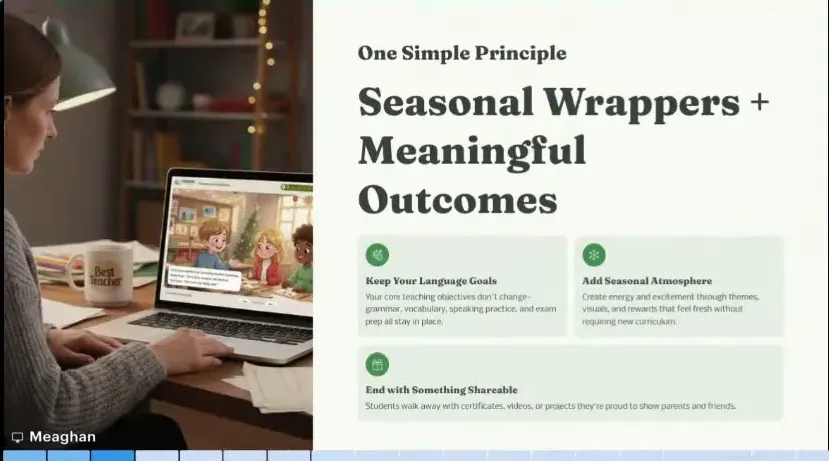
Keep language goals at the center
The seasonal extras should wrap around your learning objectives, not replace them. Continue to target vocabulary, sentence structure, listening, and speaking practice—just present them through a holiday or winter lens. That way parents see progress and students still move forward on their learning path.
Low-prep lesson ideas that actually work
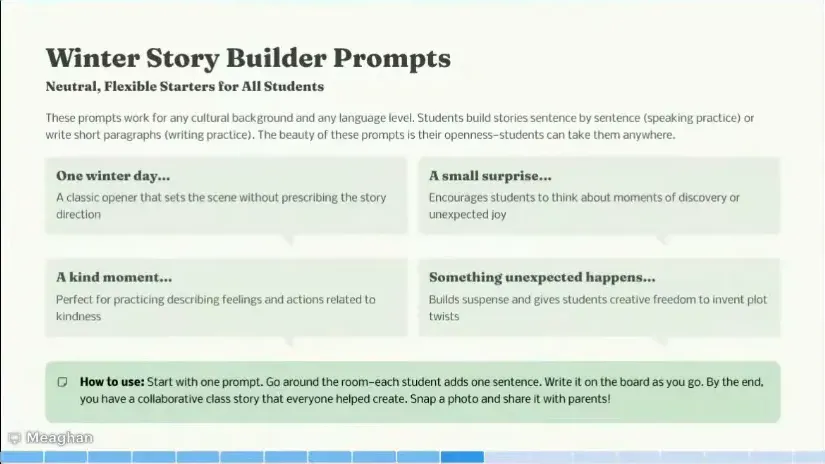
1. Storytelling that sparks speaking and writing
Use a picture prompt, a silly elf photo, or an AI-generated image to kick off a story. Students suggest the next sentence, you pop their idea into an AI image generator, and the class watches the story grow visually. This keeps engagement high and creates a shareable artifact.
Try collaborative stories with groups: each student adds a sentence. Capture the final story as a screenshot or export it into a short book for parents.
2. Book Creator projects and voice recordings
Create a class book where each child records a short line and an avatar reads back in their voice. Books like these are emotionally resonant and highly shareable—great for referrals and testimonials.
3. Gratitude and reflection activities
Reflection activities work across ages. Use prompts like “This year I learned…” or “I’m proud I can now…” to teach past tense and summary language. Turn responses into certificates, short highlight clips, or writing samples families will share.
4. Celebrations from around the world
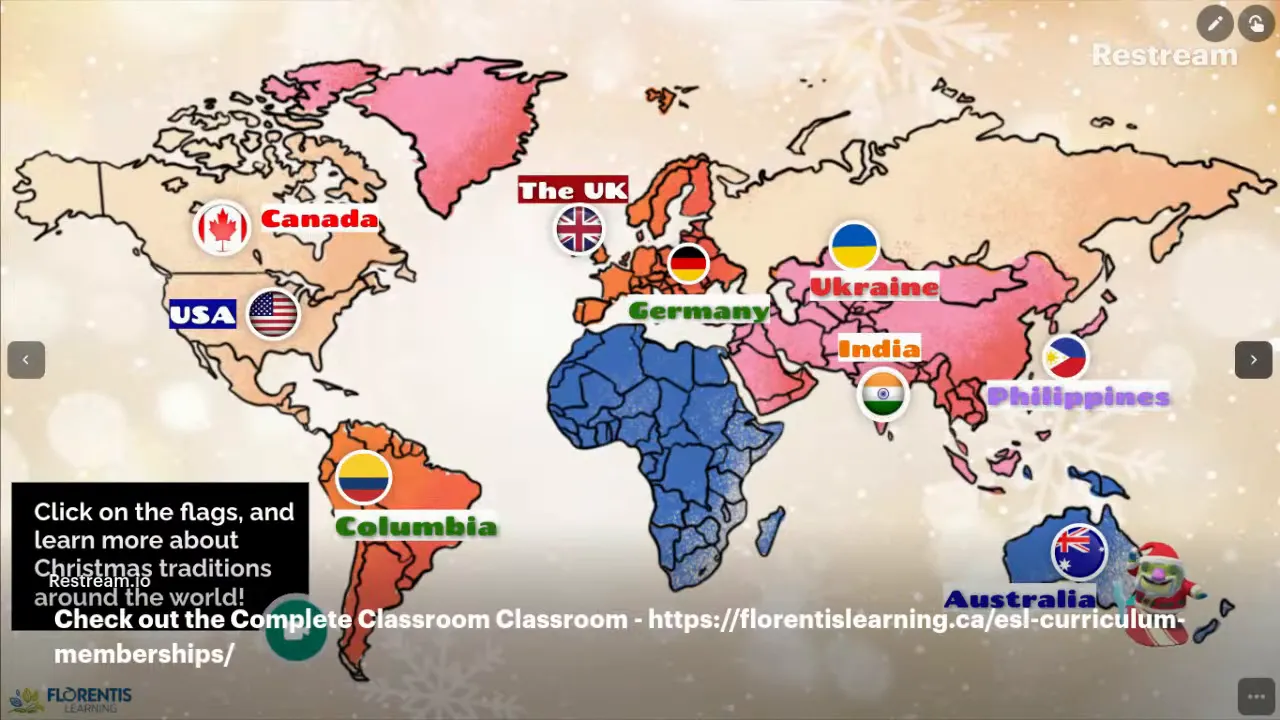
Explore one country per lesson to teach cultural vocabulary, reading comprehension, and discussion. This is especially inclusive for international students who may not celebrate Christmas but enjoy learning about other traditions.
End-of-year takeaways parents love
Give families something they can proudly share. These takeaways boost satisfaction and help with referrals.
- Certificates: “What I can do now” certificates—short, specific achievements parents understand and want to show off.
- 30–60 second highlight videos: Short compilations of class clips or screenshots made in Canva or CapCut.
- Shareable projects: Book Creator books, crafts photographed by parents, or short speaking clips.
Festive rewards that keep attention
Small rewards—sound effects, confetti, themed medals—are powerful for motivation. Add them to any lesson to make routine activities feel special. If you use a curriculum platform that supports seasonal rewards, schedule them to appear automatically during the holidays so you can teach without extra setup.

Practical tip: If a student doesn’t celebrate a particular holiday, switch to a neutral reward (sports stickers, stars or medals) so everyone feels included.
Free class vs paid holiday camp — what to choose
Both options work. Free one-off classes grow your email list and bring new families into your world. Paid mini-camps are excellent for concentrated skill development and higher per-seat revenue. Consider offering:
- Free live holiday party or mini-class as a lead magnet.
- Short paid camp (3–5 lessons) for focused topics like writing or speaking, themed around the season.
How to market seasonal lessons
Use existing students and parents as your best advertisers. Share certificates and highlight videos with a visible contact or business handle so parents can tag you when posting. A few targeted posts on platforms where parents are active will outperform a scattershot approach.
Simple 25–50 minute lesson templates
25-minute mini festive lesson
- Warm-up (5 min): Holiday-themed quick questions or “What are you thankful for?”
- Vocabulary (5 min): 6–8 themed words with matching images
- Speaking activity (10 min): Find-the-differences or icebreaker story-building
- Closing (5 min): Certificate or quick screenshot for parents
50-minute party-style lesson
- Warm-up (10 min): Seasonal conversation and review
- Interactive game (15 min): Story creation with AI images or a magnify-and-find puzzle
- Writing or recording (15 min): Short Book Creator page or sentence-building
- Wrap up (10 min): Awards, student reading, and homework (one thankful note)
Low-tech tools that save time
- Canva — quick certificates and highlight slides
- CapCut or simple phone editors — 30-second highlight reels
- Book Creator — collaborative books with student voice recordings
- Wordwall — themed vocab games that slot into any lesson
Wrap-up checklist before your holiday class
- Decide the purpose: retention, recruitment, or income.
- Keep learning goals: choose 1–2 language targets.
- Prepare one shareable takeaway: certificate, short video, or book.
- Plan 1 interactive element: story prompt, game, or collaborative writing.
- Make inclusion choices: swap religious content for winter or cultural themes if needed.
Final tips from classroom experience
Change the wrapper, not the lesson. Swapping backgrounds, adding a silly hat, or switching reward sounds gives familiar lessons fresh energy with almost no extra prep. Be choosy with recordings and shares—pick students and parents who enjoy posting and asking permission when needed.
If you use a curriculum platform, check whether it includes seasonal lessons, automated rewards, and teacher hub features like progress reports and a next-lesson button. These small pieces of infrastructure can cut your admin time and make holiday teaching feel effortless.
For help, resources, or to try sample lessons, visit florentislearning.ca or email hello@florentislearning.ca for support and ideas.
Which idea will you try first?
Pick one low-prep change—an award sound, a short certificate, or a 30-second highlight clip—and add it to your next December class. Small changes lead to big smiles, more shares, and better parent satisfaction.
Florentis Learning’s Complete Classroom ESL Curriculum is designed for independent online teachers who want to save time, engage students, and deliver real results.
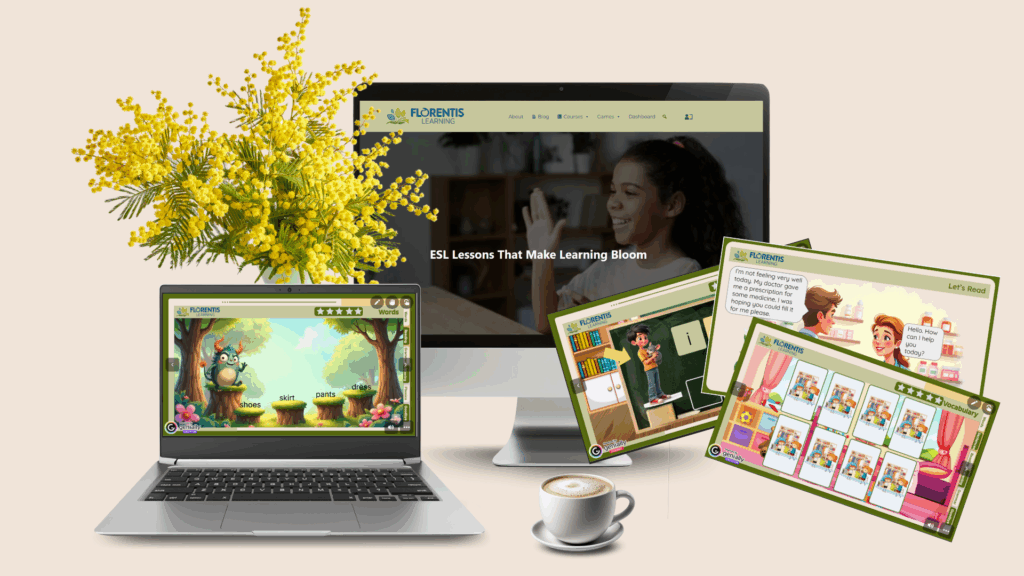
When you join with our Lifetime Membership, you get:
✅ A six level core curriculum with engaging topics
✅ A complete phonics progression from letter sounds to advanced spelling patterns
✅ Interactive slides ready for online teaching – currently more than 650 lessons
✅ Conversation curriculum with FOUR levels of speaking lessons
✅ Test Preparation Lessons to help prepare students for English exams
✅ Writing Lessons – Two levels, beginner and intermediate
✅ Built-in games and activities that keep learners engaged
✅ Seamless integration with reading, writing, speaking, and listening tasks
✅ Access to all levels, all units, and all future updates—forever
You can join with a Lifetime Membership (one payment, forever access) or choose a Monthly Plan if you’d prefer to spread it out. No commitment. Cancel any time.
Leave a Reply