

Teaching grammar can feel like the hardest part of language instruction, but it does not have to be. If you want to teach English grammar online in a way that builds understanding, not memorization, this post lays out simple, classroom-tested approaches you can use immediately. I cover why grammar trips students up, concrete techniques for different age groups, two real classroom examples, and how ready-made lesson materials reduce prep time so you can focus on teaching.
Why grammar is so hard — and what to do about it
Different learners bring different needs. Young children pick up patterns through repetition and visuals, teenagers often hide confusion to avoid embarrassment, and adults can plateau because conversational practice alone rarely fixes deeply ingrained habits. Curriculum gaps make matters worse: many programs emphasize vocabulary and speaking but do not teach grammar explicitly.
When you teach English grammar online, remember that clarity and repetition are essential. A short, focused activity that makes the grammar concrete will beat a long rule lecture every time.
Three teaching strategies that work online
- Make grammar visual for beginners. Use props, whiteboard drawings, or movement to anchor abstract ideas. Create a “near” zone and a “far” zone and return to that anchor during practice.
- Show before and after. Place the student’s original sentence next to a corrected version. Use color or highlights so the difference is obvious. This guided discovery helps learners notice patterns and reduces fear of making mistakes.
- Give advanced learners structured practice. Use short quizzes and controlled speaking tasks that target fossilized errors. Adults usually can handle metalanguage, so brief explanations plus focused drills pay off.
Real classroom stories that illustrate the approach
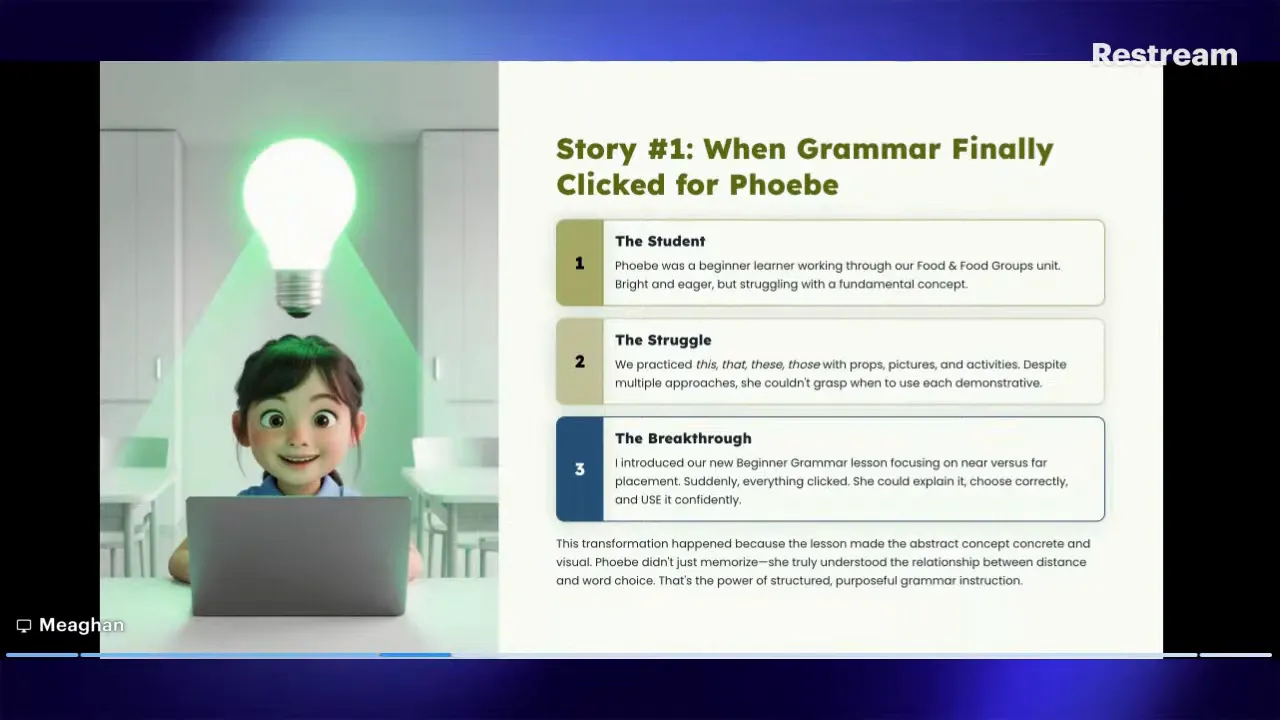
Phoebe — turning demonstratives from abstract to concrete
Phoebe is seven and struggled with this, that, these, and those. Memorizing a rule did not help. What did help was teaching near and far as vocabulary, matching pictures to near/far, and then mapping that directly to this/that/these/those. Suddenly the concept clicked — she could explain why she chose each demonstrative and use them confidently in speech.
Pedro — removing small errors to polish professional communication
Pedro had been living and working in English for years but wanted grammar practice to improve accuracy in presentations. A course that combined short grammar practice, a quiz, and immediate application to speaking tasks helped him reduce small errors and communicate more professionally. The structure—practice then speaking—matched his goals and produced fast, measurable improvements.
How ready-made lessons change your prep game
What if you could open your teaching platform and find anchor charts, guided practice slides, speaking prompts, writing tasks, and homework already assembled? Ready-made lessons let you teach English grammar online without spending hours on prep. Use lessons as-is for a full session or pick specific slides to reinforce a problem concept. This reduces cognitive load and gives consistent, effective practice across students.
Beginner grammar course — structure and sample activities
The beginner sequence is built for ages 5 to 10 and focuses on essential topics like demonstratives, adjectives, and basic verb forms. Each lesson is 20 to 25 minutes and includes a warm-up song, vocabulary checks, a short story to contextualize the target form, guided discovery slides, writing tasks with typing chips to speed production, and a listening activity.
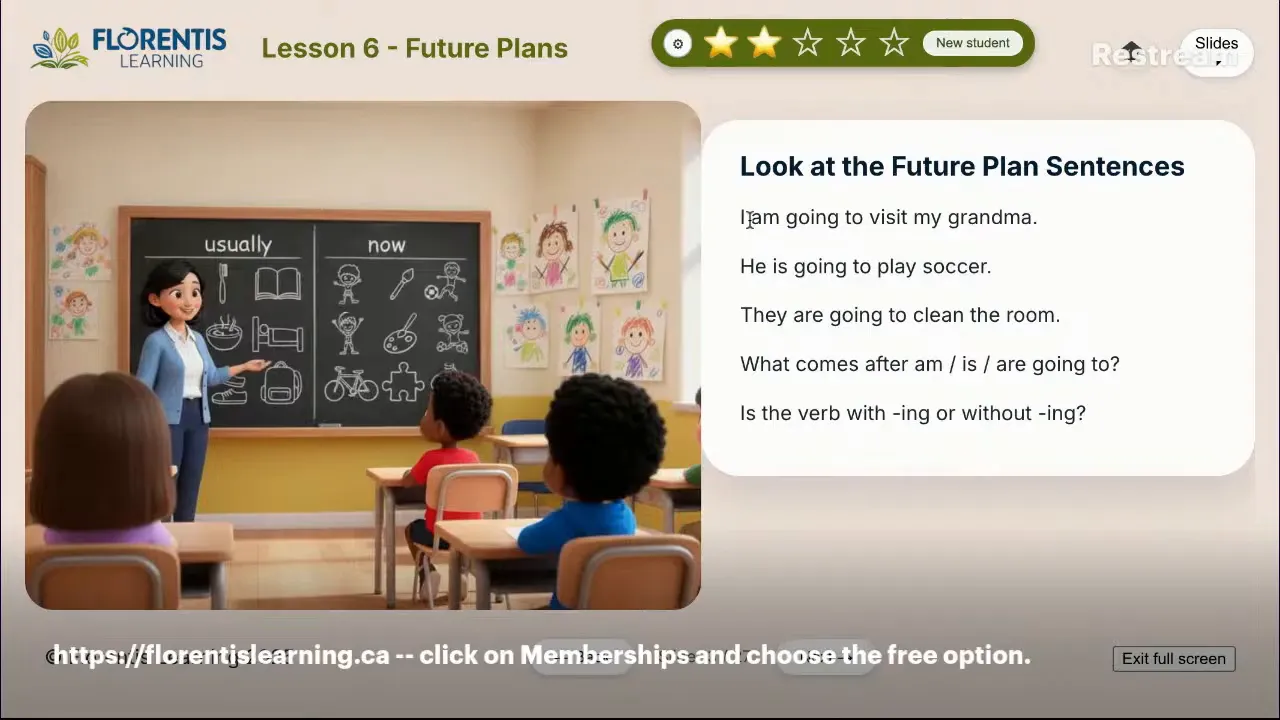
Use these lessons to make abstract grammar concrete, to save prep time, and to keep young learners engaged with games and songs.
Intermediate grammar course — focus and flexibility
The intermediate course targets older teens and adults at B1 to B2 levels. It covers major tenses, modals, conditionals, passive voice, reported speech, phrasal verbs, and articles. Lessons typically include a 12-question grammar quiz, targeted speaking questions, and optional extra practice for longer classes. You can teach in sequence or pull individual lessons as needed.
When you teach English grammar online to intermediate learners, combine brief explanations with repeated application in speaking and writing. That combination helps break fossilized errors and builds communicative confidence.
Quick checklist for lesson-ready grammar teaching
- Start with a concrete anchor that students can see or act out.
- Use side-by-side comparisons for corrections.
- Include a short quiz to measure progress.
- Apply the grammar immediately to speaking or writing tasks.
- Keep explanations short and age-appropriate.
“Make grammar visual for beginners. Not just telling them rules, but showing them the differences.”
FAQ
What age groups benefit most from visual anchors?
Young learners benefit most from visual anchors, movement, and props because they learn language through patterns and context. Visual anchors also help beginners of any age who need concrete examples instead of abstract rules.
How often should I use quizzes for adults?
Short, regular quizzes work best. A 10 to 12 question quiz every few lessons helps identify persistent errors and gives learners measurable progress without creating test anxiety.
Can I mix beginner and intermediate materials in the same class?
Mixing levels is possible if you select slides that match each student’s ability. Use the beginner lessons for concrete practice and the intermediate materials for explanation and controlled production for higher-level learners.
Where can I find ready-made lessons to teach English grammar online?
Look for curricula designed specifically for online platforms, with interactive slides, anchor charts, guided discovery, quizzes, and built-in speaking prompts. These materials save prep time and are optimized for online instruction. Florentis Learning currently offers both beginner and intermediate grammar lessons.
Final note
Teaching grammar effectively online requires clear visuals, short controlled practice, and immediate application. Use visual anchors for beginners, guided corrections for tense errors, and structured quizzes for advanced learners. With a few intentional changes to how you present grammar, you can help learners understand grammar deeply and speak with greater confidence.
Ready to Stop Scrambling for ESL Lessons?
Join online teachers using our Complete Classroom Curriculum—with structured lesson plans, engaging visuals, and support for every level from Pre-A1 to B1.
See What’s Inside
Post your Comment About This Product